Subscribe in a reader

Photo by Tracer.Ca

This is a question that I am often asked and always happy to answer. The problem is that most often, the person asking doesn’t like the two word answer that I give. So here is how the conversation usually goes…”Hey Jeff, I’m thinking of buying a digital camera and I want to get an SLR. Which camera should I buy?” And I answer “Well, it depends.” By the time I am done explaining my “it depends” remark, they usually have more questions than answers. That’s because It depends on a few critical questions that they may or may not have asked themselves.

My first question – How much money do you want to spend?

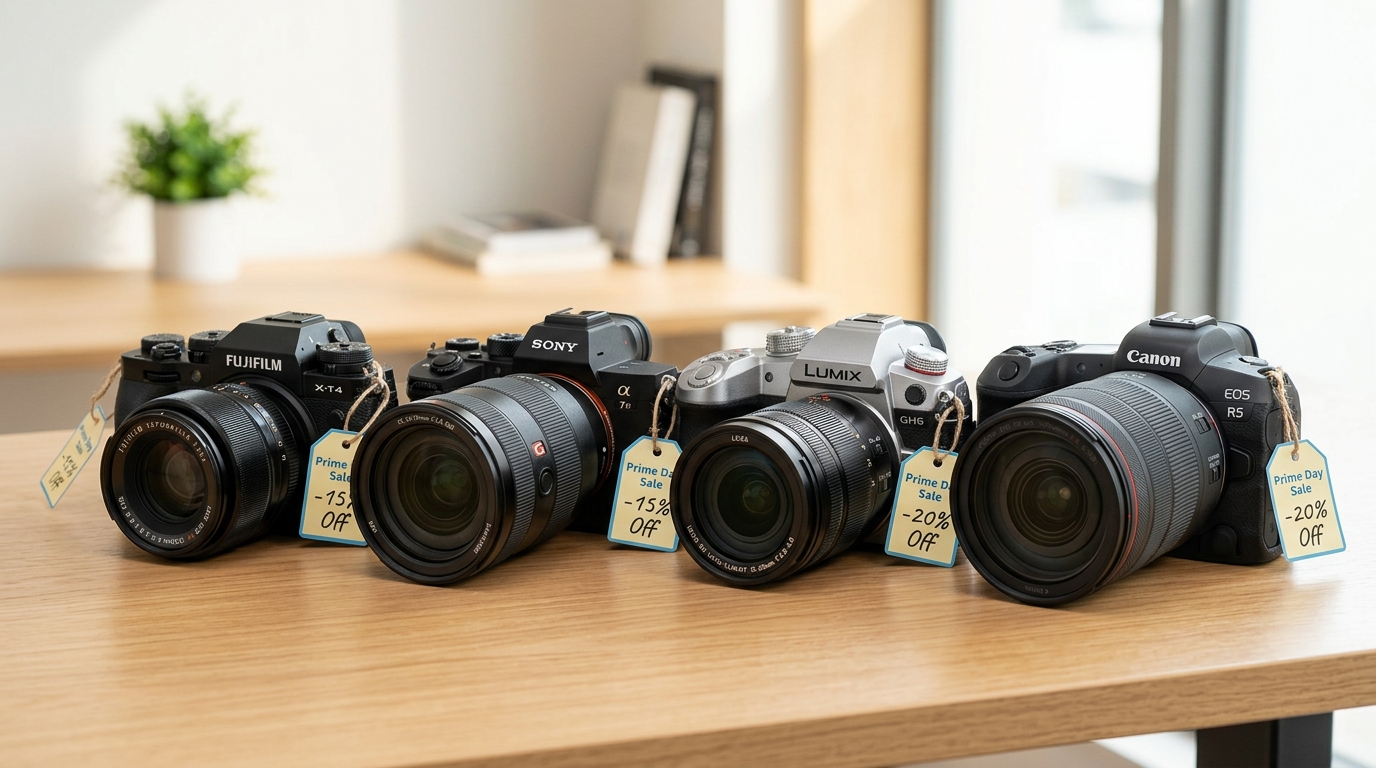
Let’s face it, when you get down to brass tacks, the largest determining factor is going to be how much you are willing and able to spend because this will ultimately put you into a specific bracket of DSLR camera. If you only have about $500 then you will be looking at entry level cameras like a Nikon D40 or a Canon 350D or maybe the Pentax K200D. Do you have a little more cash from that economic stimulus check that you want to pour back into the economy, say around $1000? Well now you are into the mid-range pro-sumer zone. You can start comparing the Canon 450D and the Nikon D60, or maybe the Panasonic Lumix DMC-L10. Oh so many choices, but you can see where it all starts and ends at the cash register.

My second question is – What do you want to take pictures of and what do you want to do with them?

That’s kind of like a part A & B question but they are related to each other. This question actually helps determine if you are looking to buy more camera than you actually need. The truth is that not everyone who is buying a camera would benefit from the fantastic resolution of the Canon 1Ds or the ISO and speed of the Nikon D3. If you tell me that your main goal is to take better pictures of your kids playing soccer and picture postcard vacation photos then you have just found another piece of the puzzle. Add to that the fact that your never going to make a print larger than 8×10 or you’re only going to be emailing or posting pictures online and we can really start to eliminate some cameras, and maybe save you some cash too. If you are going for the smaller print/online posting camera then my suggestion is to stick to a lower resolution camera. Add the soccer game factor and I’ll point you to some higher quality lenses that will help you achieve the results you are after. So if you told me that you wanted to take great pictures of your child playing soccer so that you could email them to the grandparents and make some pictures for your scrapbooks, I would probably point you to a lower end camera like the Canon 350D that comes bundled with a kit lens that has a long enough focal length to really reach out and fill the frame with those little soccer hooligans like the 28-135mm. Or possibly the Nikon D40 kit that includes a 55-200 VR lens to really get those steady shots. If, on the other hand, you are more interested in making some fine art prints in sizes of 13×19 or larger then I will certainly talk about spending more money for a Canon 40D, or Nikon D80, or the Pentax K20D and possibly a high quality lens. Because resolution and lens quality will really factor in when making big prints.

My third question – Have you considered lenses and accessories?

Most people that ask the “which camera” question are coming from a point-and-shoot world where everything was bundled into one nifty package. Not so in the world of the DSLR. This is about the time that I start equating DSLR equipment to crack because once you start buying, you can’t stop. The first consideration, after the camera itself, should be the lens. You will need a lens to stick on the front and this is where quality really counts. Most of the single lens camera bundles are coming with an 18-55mm. This lens is enough to get you started but I guarantee that it won’t keep you satisfied for long. Sooner or later you will want something in the longer telephoto range for those shots where you just can’t get close enough to fill the frame. Remember that soccer game? Try shooting it with an 18-55mm and see if you aren’t disappointed. The same thing goes for getting a long lens kit. You are not going to be pleased shooting the Grand Canyon with a 55-200mm. To really get the most flexibility from your camera you will want to have lenses that cover from 18mm to 200mm. The problem is that most camera bundles don’t carry a single lens that covers that range.

After you have figured out the lens question, now consider that wimpy pop-up flash built into the camera. If you are at all interested in taking pictures at night or in low light then you will quickly find yourself hating the pop-up. First of all, it is pretty under-powered as flashes go so you will only be able to work with an effective range of about 10-15′. Also, since it isn’t very powerful, it will only light up your subject while everything behind them is black. Not great for party pictures. We won’t even begin to discuss the red-eye that you will have to correct on almost every shot. About the only thing I have found it useful for is to pop a little fill light into a back lit photo or to give some catch lights in outdoor portraits. So to make yourself happy, you are going to want a real flash. One that lets you control the power output and maybe bounce the light off the ceiling or a wall. To get those kind of features will require an investment of at least $150. And did I happen to mention tripods, or filters, or camera bags or…..you get the idea.

The bottom line

It’s at about this point in the conversation where the eyes start to turn glassy as you realize that there is no easy answer. This is also where I send you off to do some heavy thinking and ponder the new questions that I have raised. As I see it, a DSLR is going to be an investment and so it should be treated that way. It shouldn’t be determined by what’s on sale this week at BestBuy but by determining what you need and want from a camera system and how it will service your needs both now and in the future (not that you shouldn’t look far a good sale once you know what you want). Because after all, if you are going to invest your money in a camera, shouldn’t you invest some time in making the decision?

A final word of advice for the camera buyer

Once you have determined what your needs are, do some research. Start looking at camera reviews on sites like DPReviews , 1001 Noisy Cameras ,or Steve’s DigiCams. But don’t stop there, find a good local camera shop and get some hands-on camera time with the models that you are contemplating. Don’t be afraid of asking questions from the salesman either. These guys get briefed from the camera manufacturers on all of the ins and outs and they can be your best resource for information. All I ask is, don’t make them spend an hour with you and then run off to find some bargain on the internet. If you find a great deal, give them a chance to match it. I think you will find that having a local camera shop guy will benefit you in the long run…and you won’t have to pay shipping.

Related posts:

  1. What’s Your Must Have Photo Accessory?
  2. Upgrading to a Full Frame Camera? You May Have to Leave Your Old Lenses Behind
  3. DSLR Video – From Camera to TV
  4. New Nikon for dSLR Video Shooters – The D5000
  5. Make Better Videos With Your DSLR
15 Responses to “I want to buy a DSLR, which camera should I buy?”
Trackbacks
  1.  
Comments
  1. Ken says:

    This is easy for me but not for you.

    I use the Nikon D300, but my sister just bought the Nikon D60 and loves it.

    When I factor in the wonderful tech support and quality of Nikon, and when you call Nikon you talk to a live person, and hang time has been no more that 5 min for me

    I left Canon 2 years ago and took a hit on selling but I have not looked back

    affectionately Nikon
    Ken

  2. mike says:

    Great summary! I always run into the same question and i also cover all the points you mentioned above. The lens is actually a big part of the expenses. It’s really where most of the budget is spent…

  3. Darrin says:

    Great post Jeff, especially the part about the local camera shops. As opposed to big retail chains, their staff is more knowledgeable about the different products and can really help in selecting the one that best helps the people’s needs rather than pushing certain products based mostly on the name of the manufacturer. Some of them also offer free classes if you buy a camera from them. Also, camera manufacturer reps come from time to time to these stores to talk about their newest products and answer questions (like “When are those AF-S normal and wide primes coming???” – LOL). Doing your homework before going to a store by visiting the sites you mentioned and reading the reviews as well as people’s comments (with a critical mind) is really important. That being said, I’m very satisfied with the two local camera shops in the DC area – PhotoCraft and Penn Camera, but some things I was only able to find at Adorama ;-)

  4. I always stress holding the camera before buying. Sometimes, the camera can be heavy, especially with certain lenses, or too small for large hands. Also, I ask what equipment does the user already have? I had a couple of Canon batteries and was familar with the Canon P&S menu. So that’s part of my reason with buying Canon.

  5. Steve Kalman says:

    Great post. Its a question I get asked all the time, too.

    Another thing I ask them is if they’re interested in post processing in a program like Photoshop. If yes, then I point them to a camera that can generate raw images. As a Canon fan, I also sometimes recommend the G9, a very high end point and shoot that has raw capability (around $450).

    On the opposite end of the spectrum is one of my major pet peeves. Someone will look at a photo and ask what camera [brand] I use. As it that was the only thing that matters.

  6. Mike says:

    I always tell people similar things, with the following addendum. Go to a camera store and tell the clerk what you’re looking for. If s/he takes one camera off the shelf and says, ‘This is the one for you!’ then leave. Tell them to have a nice day or whatever, but walk out. A good clerk will invest an hour or two of their time with you, allowing you to handle different cameras, explain their functions and answer your questions. After an hour or two your head will begin to explode, so take the nice person’s card and go home. Let your memory play over the cameras you handled and what you remember of them.

    Go back the next day, find the same clerk and make your purchase.

  7. Frank C says:

    Speaking of entry level DSLR, why not get a Canon 1000D (a.k.a. Rebel XS).

  8. Jonno says:

    It always amazes me that owners of cameras always say this is the brand for me, so its a great camera, and you should buy it. That’s great, but there are also others about equal or better and innovative. This is where Olympus shines. Their camera range seems to have taken a giant leap of faith, and are a great support act to an already good photographer.
    I am only an amateur but feel very comfortable with this E510 camera. Lightweight and fairly simple to operate.
    Their lenses are top notch, and some great shots previously not possible by me have been made with this camera. Now if only they packed a good flash as part of the parcel, these cameras could easily outsell Nikon and Cannon.
    Another satisfied customer!

  9. Jack Harwick says:

    I have an engenering background and love doing product research, so when it was time for a new camera kit I started reading. With 50 years of photo experience, i only had to learn the new fetures/benifits/costs.

    I travel a lot and have carried 50 Lbs of medium format around the world, enough to know that I didn’t want to do it again. I do a lot of landscape and architectural photography, so I started by looking for the perfect lens for that application. Settling on the Olympus 12-60mm f/2.8 SWD as a resonable sized great lens that works very well with 1.4 extender to give a 35mm = range of 24 to 168mm. Once this choice was made I had another selection to make, the camera could have been the Olympus E3, but it’s too heavy, and the main difference between it and the E 510 was the metal case/waterproofing, which I didn’t feel I needed. Oh, and I saved over a thousand dollars, that might have been a factor too. (some of that money will now go to upgrade to the E520)

    The previous post laments the lack of flash for Olympus. I don’t understand this they have four models, that tilt, swivel, are fully auto, and two have wireless remotes. I bought the cheap one and never been dissatisfied. My whole kit weighs less than five pounds with case, camera, extender, flash, spare battery and cards, filters and the manual (just in case)

    If you want respect, be seen carrying a Nikon or Canon. If you want your pictures to be respected you can get that from an Olympus for a lot less money.

  10. Tommy says:

    I’ve had my Olympus e-510 for a year now, and it is truly excellent. As a professional photographer, I manage global photo shoots and carry several cameras. Although the e-510 has become my ‘default’ camera, I have taken beautifully publishable photos with even my littlest pocket camera.

    Several things to remember:
    It’s not the hardware that makes the artist.
    It’s not the amount of money you spend that makes your work great.
    If you don’t understand the technology, don’t buy it.
    If it doesn’t fit nicely in your hand, don’t buy it.
    If you’ve already bought it, learn about it.

    Which brings me to a little ’boutique’ workshop in Manhattan Beach, California. Called http://www.techno-challenged.com, they endeavor to teach newbies how to deal with the technology that they find themselves amid. I found them because I noticed that the laughter was continuous. They were teaching a class called “So you got a Digital Camera… What now?” Folks walked in timidly, embarrassed by the fact that they didn’t understand their technology. At the end of the day, they walked out with their heads held high, and their cameras clicking delightfully at their colorful surroundings.

    Point?

    Don’t buy a camera because ‘everyone’ has it. Learn to use it. Get to know it. Try new things with it. And don’t let anyone make you justify why you have the one you have. Thanks for listening.

  11. Carolina Fernandez says:

    Hola Jeff, te pregunto cual camara digital debo comprar para trabajar haciendo fotografias sociales y posiblemente fotoperiodismo. Estoy pensando en comprarme un flash tambien.
    que modelo de Nikon y cual de Canon? En mi pais el serviocio tecnico de Nikon es muy malo, prefiero comprarme una Canon. Tengo una amiga alla en Washington que pude comprarmela..Gracias!

  12. Doesn’t really matter which camera you have as long as you know how to compose and MAKE a picture.
    Buying an expesive camera doesn’t necessarily make for better pics does it?
    What are you going to do with it is a great question though.
    As I usually say f8 125 and be there.
    Take good care and have a great Xmas and new Year.
    The Baldchemist

  13. CannonMan says:

    Hi, Thanks For Great Information.

  14.  
Leave a Reply