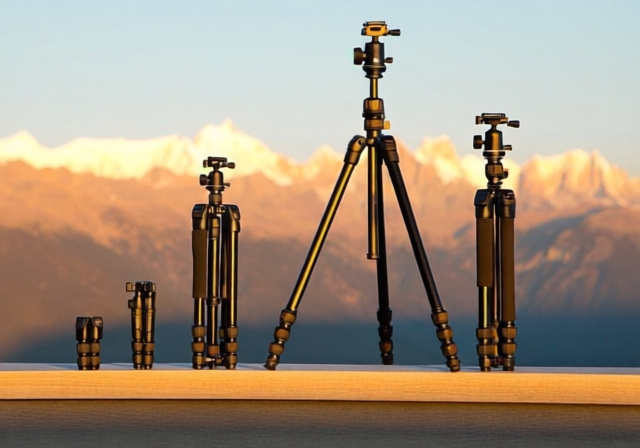
Infrared or IR photography used to be the domain of specialty films that were sensitive to the IR spectrum of light. They were ultra-sensitive to visible light and needed to be handled in complete darkness including loading and unloading the film in the camera. Nowadays, you can obtain IR results by using your digital camera. The sensors in your digital cameras are extremely sensitive to the IR spectrum, so much so that camera manufacturers place a special IR blocking filter in front of the sensor to block the IR from reaching it. But just because there is a blocking filter doesn’t mean you can’t capture stunning IR. Most of the blocking filters in today’s digital cameras still allow some IR to pass and it is within these passing wavelengths that you can capture your IR images with very little expense. All it takes is an IR pass filter, a tripod, and a little trial and error. The IR pass filter, such as the Hoya 72, blocks the visible spectrum of light and allows just the IR wavelengths to pass through to the sensor. To properly capture IR, you will need to mount your camera to a tripod. This is because the exposures you will have to use will be to long for hand-holding. Also, the IR pass filter will be blocking your visible light which means that you won’t be able to see through your camera. To properly capture an image you will need to pre-focus the camera on your scene and then afix the filter to the lens. Now it’s just trial and error on your exposures. IR light is most abundant using sunlight as your light source so you will get your best results from fully sunlit scenes. The beauty of the digital camera is the instant feedback that you receive from your camera’s LCD screen. Start of shooting around 5 second exposures and work your way up from there until you achieve the proper exposure for your scene. Since IR focuses at a different plane than visible light you should shoot around f/8 which is near the sharpest f-stop of most lenses. Also, if you can, adjust your camera for maximum sharpening and vivid color. Your images will not be color but the vivid setting will give you your best results.
If you really want to get serious with your IR photography and want more flexibility in your shooting, you should consider getting a digital camera altered for IR photography. In this process the IR blocking filter is removed and replaced with an IR pass filter. The benefits of this are two-fold. First, since the blocking filter is removed, exposures are much more akin to standard digital photography. The IR light will render proper exposures at f/8 with shutter speeds ranging from 1/60 to 1/1000 of a second depending on your atmospheric conditions. The second benefit is that since the filter is placed directly in front of the sensor, there is no filter blocking your lens and you can use your viewfinder to compose and focus your images.
The only drawback to using a converted camera is that once converted, it will only shoot IR so you won’t be able to use this for regular photography. But if you happen to have an older DSLR in the closet gathering dust, you are half way there. So, what if you don’t have an extra body lying around? You might want to consider buying an older model camera for conversion. One of the best cameras I have seen for shooting converted IR is the Nikon D70. A quick check on eBay will show you that you can pick up a good working body for about $250. Not a bad price for a very good camera. You might also consider getting your old CoolPix converted. The coolpix 950 was one of the best early point-n-shoot models made by Nikon and sells for around $50. If you’re thinking that you won’t be able to take great images with a CoolPix, I invite you to check out the work of Carl Scholfield. All of his stunning IR images were produced with nothing more than a CoolPix 950 and various IR pass filters (the CoolPix 950 sensor had a much higher IR sensativity than later models).
So what do you do if you are ready to take the plunge and get a camera converted? Try heading on over to LifePixel. There you can do one of two things, you can buy the filter and they will give you the step-by-step instructions to replace your internal sensor filter. If you aren’t that adventurous, and not many folks are when it comes to dismantling their digital cameras, then you can have the folks at LifePixel do the conversion for you. The prices vary depending on what type of camera you are getting converted. A Nikon D70 will cost about $350 for the filter and conversion for the standard color IR. The CoolPix conversion will run you about $300. LifePixel also offers an Enhanced Color IR and a Deep B&W IR, each will add $50 to the cost of the conversion. If you would like to convert your own, the cost of the filter is $145 for the standard and $195 for the enhanced versions. To see the differences in the different filters and information on other camera conversion rates head on over to LifePixel. If you just want to try out the IR technique without springing for a camera conversion you can pick up a Hoya 72 for about $150. Other filters to try out are the Wratten #87, #87c, #88a, and #89. I would try to purchase a used one on eBay to see how I like it before actually spending the $150 plus for a new filter.
No matter which way you decide to go there is one thing you won’t be able to deny, once you starting shooting digital landscapes, you won’t ever want to stop.
Related posts:


Entries (RSS)
Shooting Digital Infrared…
How to shoot digital IR with your existing camera or converting an older digital camera for full-time IR shooting….